| Term | Description |
|---|---|
| Lower | The action of rolling out a dough using a rolling pin or a laminator. |
| Offal | Edible parts of animals for slaughter: heart, brain, liver, head, foot, kidney, tenderloin. Duck and goose livers are not included in the "offal" category. |
| Slaughter | Fins, necks, hearts, livers, gizzards, feet, of poultry or game birds |
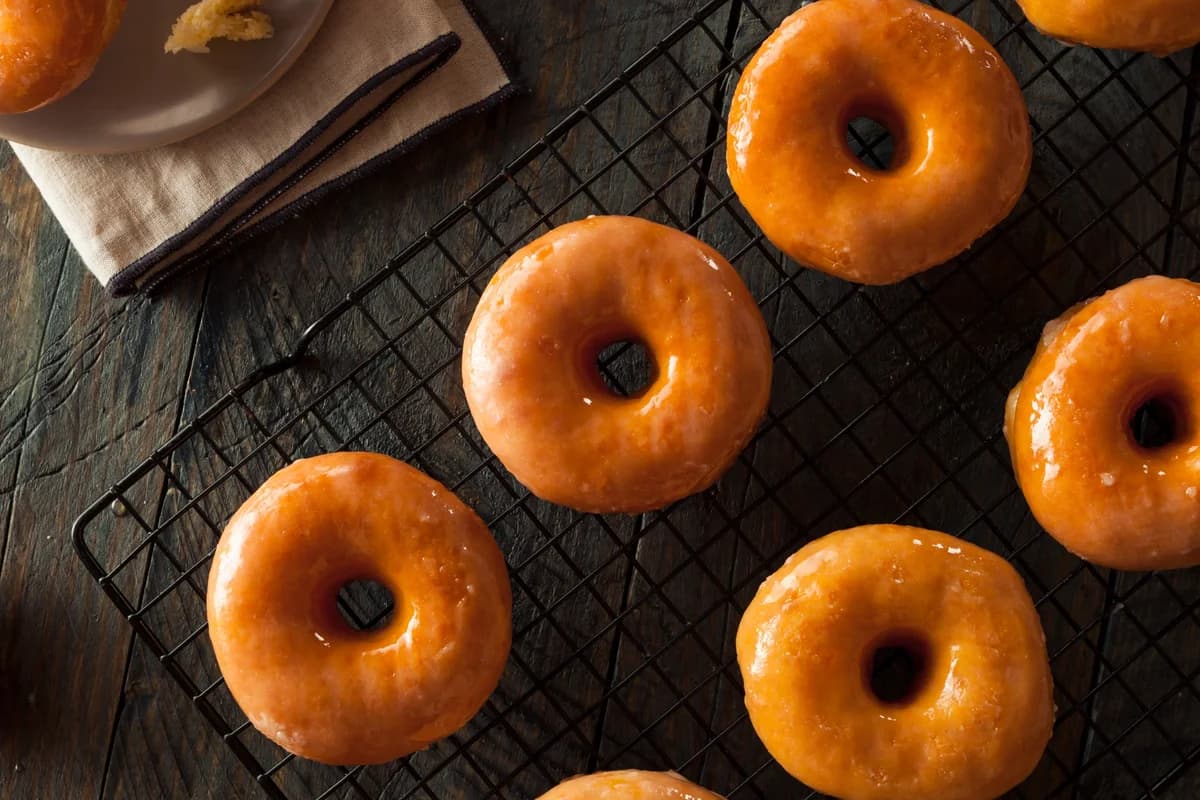
| Apricot | Brush a topping (thick syrup, coulis...) over the fruit of a tart, for example, to give it a shiny finish. |
| Aiguillette | Thin slices of poultry fillet |
| Lingonberries | Small, very sour, red fruits that often accompany game. |
| At the water table | A very slow method of cooking an egg-based preparation, usually in a bain-marie. |
| English style (baking) | Cooking vegetables in boiling salted water |
| English style (breading) | Fish breaded in flour, beaten egg and breadcrumbs |
| Alcohol | Adding alcohol to a preparation |
| Missed | Round cake tin with high edges |
| Sweethearts | The spinal cord of meat animals cooked in a broth (beef, veal, mutton) and then browned with garlic and parsley (amourettes is always written in the plural). |
| English | A mixture of beaten eggs, salt and pepper, possibly a little water and a drizzle of oil, used for breading foods. |
| Device | Mixing the various ingredients making up the base of a recipe |
| Level | Cut the roots, leaves or fans of vegetables flush with the surface. |
| Flavors | Spices and aromatic plants to flavour your dishes |
| Flavoring | Introduce spices and aromatic plants into a preparation to flavour it. |
| Watering | Pouring juice, sauce or fat on a roast, poultry or dish during cooking |
| Dry | Said of cooking without the addition of fat at the start. Lardons or sugar to make caramel, for example. |
| Aspic | A cold savoury or sweet preparation to which gelatine has been added for gelling. |
| Attiéké | Cassava couscous popular throughout Africa and Europe |
| On the ribbon | A whipped preparation that is "ribboned" when it flows like a ribbon. |
| Water bath | Delicate cooking of food in a saucepan placed in another, larger saucepan filled with boiling water and set over low heat. A bain-marie is used to melt chocolate, to make egg-based sauces (hollandaise, sabayon) or to keep warm a sauce that fears being reheated. |
| Barder | Wrap a thin slice of bacon around a meat, poultry or roast... |
| Beat | Use a whisk to vigorously whip a preparation (or appliance) |
| Beatilles | Stew of giblets and offal with mushrooms, bound with a sauce and used to garnish bouchées à la Reine or pies. Béatilles is always written in the plural. |
| Clarified butter | Melted butter, then decanted |
| Maître d'Hôtel butter | Soft butter mixed with chopped parsley, lemon juice, salt and pepper. Can be formed into a sausage, wrapped in film, placed in the freezer and sliced as required. |
| Hand-cranked butter | Creamed butter, mixed with flour in equal quantities. Used to bind sauces |
| Hazelnut butter | It's a butter cooked in a frying pan. As soon as it boils, the butter takes on a nutty color. Use immediately |
| Butter ointment | When brought to room temperature, the butter becomes soft and can be worked into a paste. |
| White (preparation) | A mixture of flour and cold water, then added to boiling water with lemon and chinoiser, i.e. strain. Used to cook artichoke bottoms, certain vegetables and offal to preserve their white appearance and prevent oxidation. |
| White (baking) | Cuisson à blanc. Used to describe a sweet or savoury pastry that is baked before adding the filling. |
| Blanching (vegetables) | Plunge vegetables into boiling salted water for a few minutes, then cook or freeze them. |
| Blanching (eggs) | Whisk eggs with sugar until white and frothy. |
| Blanchir (butter) | Work softened butter with sugar until the mixture whitens. |
| Blonding | Lightly sauté a food until it turns golden brown (onion, shallot, flour, vegetable, etc.). |
| Bouquet garni | Thyme, bay leaves, celery sticks, leek greens and all aromatic plants according to taste, tied up to flavour a dish. |
| Braise | Slow cooking of a vegetable in fat, covered and without adding water. |
| Bréchet | Y-shaped median bone of the sternum of poultry and birds |
| Brider | Tie up poultry before cooking. Close a stuffed bird using a needle and kitchen thread. |
| Brunoise | Vegetables cut into small 1 to 2 mm cubes |
| Buisson | How to arrange shrimp in a pyramid shape |
| Canneler | Using a piping tool, make incisions all around the lemons and other citrus fruits for decoration. |
| Canneleur | Citrus zest removal tool (zester) |
| Caramelize (coat) | Coat a sweet or savoury ingredient with caramel |
| Caramelizing (mold) | Coat the inside of a mould with a layer of caramel |
| Caramelizing (baking) | Brown a vegetable or meat in fat and add a little sugar at the end to caramelize (onions, endives, meat...). |
| Carcass | Animal skeleton. Poultry carcasses are used to make "poultry stock" or "poultry broth". |
| Breadcrumbs | Bread dried then mixed. Used to make breadcrumbs |
| Chastening (crustaceans) | Remove the central gut from shrimps, langoustines... (black filament on the back of shellfish, which is removed by an incision and prevents bitterness). |
| Chastening (crayfish) | The crayfish tail is made up of 3 "scales". Simply grasp the middle one between your fingers, turn it to the right and pull to remove the gut, which may cause bitterness during cooking. This must be done before cooking, when the crayfish are still alive... |
| Heating | Coat a piece of meat or fish with a hot-cold sauce |
| Lining | Put a layer of butter, flour, greaseproof paper or cling film on the bottom and inside walls of a mould. You can also use lard or strainer to make a terrine, or spoon cookies to make a charlotte... |
| Chiffonade | Vegetables or salad cut into thin strips |
| Chinese | Very fine strainer |
| Chinoiser | Filtering a liquid through a strainer |
| Ciseler | How to cut onions, shallots, etc. into small pieces |
| Lemon | Rub the surface of certain fruits and vegetables with lemon to prevent oxidation. Bananas, apples, avocados, artichoke hearts... |
| Civet | A stew made with the animal's blood. Originally, civet (chives) was added, hence its name. |
| Clarify (broth) | Action of rendering a broth clear by removing fat deposits and/or impurities from the surface. Proceed when the broth is cold. |
| Clarify (butter) | A process for separating butter from its whey. To do this, heat the butter over low heat or in the microwave, leave to stand and the whey will settle to the bottom of the container, then simply collect the butter on the surface. Clarified butter does not burn during cooking, and can be used to make delicate sauces such as hollandaise. |
| Clarify (egg) | Action of separating the yolk from the white of an egg |
| Cloûter | Pierce an onion with cloves. It's best to leave the onion skin on, as this adds a lot of color to the dish. |
| Compote | Cook vegetables or fruit for a long time over a low heat to turn them into compote. |
| Crushing | The term most often used for tomatoes. To do this, the tomato must be seeded, peeled and cut into small cubes. |
| Confire (grease) | Long cooking and preservation in its own fat (pork, goose, duck) |
| Confire (conservation) | Preserve various fruit or vegetable preparations in oil, alcohol, vinegar or sugar. |
| Confire (fruit) | Slowly cook whole fruits in syrup for a long time to preserve them. |
| Contiser | Gently slice the skin of poultry or fish to insert slices of truffle. |
| Corail | Red-orange part of the stomach of crustaceans and scallops |
| Cord | Sauce all around a dish |
| Horn | Small flexible plastic rectangle used to scrape the bottom of containers when transferring to another dish. |
| Corser | Enhance the flavor of a dish by adding spices or reducing the cooking juices |
| Coulis | Thick sauce made by blending cooked or raw fruit or vegetables |
| Chiboust cream | In homage to the name of the pastry chef who created the St Honoré, which includes it, light custard made with egg whites. |
| Crème fleurette | Liquid crème fraîche with 35% fat content. Ideal for whipped cream. |
| Strainer | Fatty membrane surrounding the viscera of the pig, shaped like a net. It is used in cooking to hold a preparation together (pâté, crépinette, paupiettes) and add softness to cooking. |
| Croque au sel | A way of eating raw vegetables soaked in salt (radishes, tomatoes), often accompanied by buttered bread. |
| Blank firing | Baking a tart base without filling. A layer of greaseproof paper and/or dried white beans is placed on the tart base, to prevent the pastry from puffing up during baking. |
| Cul de poule | Most often a stainless steel bowl with a round bottom. It is used for all types of cooking and pastry-making preparations. |
| Darne | Thick slice cut transversely from a large fish (hake, salmon, tuna) |
| Debrider | After cooking, remove the strings that hold the bird in place. |
| Decanting (meat) | Remove pieces of meat from a sauce and set aside in another container |
| Decanting (butter) | Decanting clarified butter means removing the whey |
| Shell | Removing shells from crustaceans |
| Decook | Add cold water to cooking sugar or jam to reduce cooking time |
| Deglaze | Add a liquid (wine, water, poultry or veal stock, etc.) to the caramelized juices at the bottom of a container. |
| Defrosting (vegetables) | Salt a raw vegetable to restore its water content (e.g. cucumber). |
| Defatting (meat) | Soaking meat in salted or vinegar water to remove impurities (e.g. beef tongue and certain offal or shellfish). |
| Degreasing (meat) | Removing excess fat from a piece of meat |
| Degrease (broth) | Use a spoon to remove the fat that has formed on the surface of a broth or sauce... |
| Degreasing (container) | To remove fat from the bottom of a frying pan or casserole used to brown food or meat before continuing cooking. |
| To preserve | Nerve removal from fresh meat or foie gras |
| Stone | Remove pits (cherries, plums, olives, etc.) |
| Skinning | Use a knife to separate the various pieces of a large butcher's cut. |
| Skinning | Remove skin from rabbits, hares, eels, sole... |
| Skimming | Skimming/degreasing |
| Dice | Cutting fruit or vegetables into small squares |
| Drying | Work the dough over the heat until the water has evaporated (cabbage dough, for example). |
| Relax | Make a preparation more fluid by adding a liquid |
| Develop | A dough containing yeast that is left to "grow" at room temperature. It will develop and increase in volume |
| Gilding | Brown meat or vegetables until golden brown |
| Gilding | A mixture of egg yolk and water, applied with a brush to a dough before baking to give a pretty color to the preparation. |
| Dresser | Arrange a dish harmoniously on serving plates |
| Duxelle | Thinly sliced button mushrooms, browned in butter with chopped shallots |
| Ebarber | Remove fins from fish. Remove beards from mussels |
| Scaling | Removing fish scales |
| Spread | Removing shells from hard-boiled eggs |
| Skimming | Skim off surface scum from syrup, jam, sauce or stock. |
| Leaf removal | Remove the cooked flesh from fish or poultry between the fingers. Remove the leaves from an aromatic plant |
| Thinning | Cut almonds and dried fruit into thin strips |
| Drain | Remove water from food by pouring it through a colander, strainer or salad spinner. |
| Egrener | Detach grains from a cluster or ear of corn |
| Mince | Cut into slices of varying size (onion, shallot, etc.). |
| Pruning | Remove the skin. Used for almonds, tomatoes... |
| Poison | Transformation of starch when in contact with a hot liquid |
| Piece cutter | Metal or plastic shape for cutting pasta. Can be plain or ribbed |
| Emulsify | Thoroughly mix a fat (butter, oil, sauce) with an egg yolk, mustard or other binding ingredient. |
| Bake | Place a ready-to-bake dish in an oven that has been heated to the correct temperature. |
| Coating | Evenly coat a food with a sauce or topping |
| Peel | Removing skin from food |
| Husk | Remove fruit stems after washing and draining. |
| Climbing | Crosswise slicing of meat and vegetables |
| Steaming (pasta) | Place leavened pasta in a proofer for fermentation |
| Steaming (cooking) | Gently stew certain dishes |
| Evider | Remove the central part of certain fruits (apples, pears, etc.). |
| Shaping | The act of shaping a dough or preparation. Example: shaping bread rolls |
| Pheasant | Suspending a game animal in a cool place for several days until it takes on a full-bodied odor. Used less and less |
| Farce | Preparation based on minced food (meat, vegetables), seasoned and sometimes bound with an egg, used to garnish the inside of poultry, roasts or to make pâté. |
| Stuffing | Fill the inside of a fruit, vegetable, meat or fish with a stuffing. |
| Fillet (quantity) | Said of a few drops of lemon, vinegar or oil. Any liquid brought in small quantities |
| Net (part) | Most delicate part of an animal (fillet of sole, beef, poultry) |
| Threading | Lift the fillets of a fish using a flexible-blade knife (a knife with the name "filet de sole"). |
| Filming | Cover a dish or food with cling film to protect it before placing it in the refrigerator. |
| Flamber (alcohol) | Pour heated alcohol over a preparation and ignite it |
| Flamber (poultry) | Quickly run a piece of poultry or game under a flame to remove fluff. |
| Fleurer | Dust a work surface or pastry case with flour to prevent sticking. |
| Fleurons | Small crescent-shaped motifs made from puff pastry to decorate dishes. |
| Go for it | Line a tart tin with a layer of pastry. |
| Fountain | A pastry made with flour, with the aim of adding all the ingredients needed for the recipe to the center. |
| Tread | Strain a semi-liquid preparation through a sieve. Press strongly with a pestle to extract maximum juices. |
| Frémir | Bring a liquid to a gentle boil |
| Frying | A cooking technique in which food is immersed in an oil bath. |
| Fumet | Juice prepared from fish heads and bones, moistened with white wine and accompanied by diced carrots, garlic, onion and spices. The filtered juice (fumet) is used as a base for many sauces to accompany fish. |
| Ganache | Chocolate preparation with butter and/or cream |
| Gastric | Said of a preparation based on sugar and white vinegar, cooked until a blond caramel is obtained. It's the base for sweet and sour sauces. |
| Gigue | Big game haunch |
| Meat ice cream | Untied fund minimized by evaporation |
| Glacer (dessert) | Covering a dessert with chocolate icing |
| Glazing (vegetables) | Cooking food with water and butter. White, without coloring, brown, with coloring. At the end of cooking, the liquid should have completely evaporated and the vegetable should be coated and shiny. This cooking method is ideal for young carrots, turnips and small onions. |
| Glaze (meat) | To brown the surface of baked meat by basting it with the cooking juices. |
| Glacer (salamander) | Use the salamander (grill) to brown the surface of a sauce or cream. |
| Goujonnette | Tongues cut on the bias from sole fillets |
| Grease | Brush butter or oil over a mold, baking sheet or dish. |
| Gratinate | Sprinkle a preparation with cheese or breadcrumbs, then place under the grill to brown the surface. |
| Grill (food) | Exposing food (meat, poultry, fish, vegetables) directly under the oven grill |
| Toast (bread) | Toasting bread in the toaster or under the broiler |
| Dressing (fish) | Trimming, scaling, gutting and washing fish |
| Dressing (poultry) | Flaming, trimming, gutting, trimming poultry or game birds |
| Chop | Cut into small pieces using a knife or electric food processor. |
| Historier | Means to decorate. In cooking, this term often refers to the cutting of a lemon or citrus fruit or a tomato into "wolf's teeth". |
| Imbiber | To moisten to penetrate a liquid (syrup, alcohol, liqueur, milk...) in various preparations in order to add softness and flavour (example: moistening a sponge cake with rum). |
| Incise | Make shallow incisions on the surface of a fish or on the fatty part of a duck breast to facilitate cooking. |
| Incorporate | Adding an ingredient to a preparation (an appliance) |
| Infuse | Put an aromatic substance into boiling water to perfume it. |
| Jabot | Pouch formed by the bulge in a bird's esophagus, in which food remains before passing into the stomach. Also called "gave". |
| Julienne | Vegetables cut into strands |
| Lamination | Stretch dough using a rolling machine to obtain the desired thickness. |
| Rolling mill | Dough rolling tool |
| Larder | Using a larder, push strips of bacon into a piece of meat. |
| Bacon | Pieces of bacon cut into small sticks |
| Sourdough | A ball of bread dough containing fresh yeast that has been "developed" and then added to the bread dough to sow it and make "leavened" sourdough bread or pie dough. |
| Rise | Gently remove fillets from poultry or fish with a knife. |
| Link | Operation designed to give consistency to a liquid by adding flour, cream, egg... |
| Link | Action of thickening a sauce by adding cream, egg, cornstarch, roux... |
| Limoner | Remove bloody parts and skins from certain offal (brains, sweetbreads, lamb, etc.) under a trickle of water. |
| Smoothing (spreading) | Spread the surface of a dessert or cream with a spatula. |
| Smoothing (beating) | Vigorously whisk a sauce or cream to make it smooth |
| Shine | Brush clarified butter, jelly or a topping over the surface of a dish to give it a shiny finish. |
| Luter | Weld the lid of a casserole with a strip of "dead" dough (flour+water) to seal it for cooking without evaporation. This process is mainly used to cook Alsatian Baeckoeffe, which requires several hours of cooking. |
| Freeze-dried | Dehydrated food at very low temperature, under vacuum |
| Macerate | Soaking food in a liquid (alcohol, oil, lemon juice, wine, etc.) for varying lengths of time to flavour or preserve it. |
| Maïzena | Corn flour used instead of wheat flour to thicken a sauce |
| Mandolin | Kitchen utensil for slicing vegetables |
| Marinade | A liquid with herbs in which meat or fish is soaked for a few hours. |
| Mariner | Dipping food in a marinade for flavouring purposes |
| Mark | To start cooking a food by browning it on all sides. Usually before placing in the oven to finish cooking. |
| Massé | Said of a sugar syrup that has crystallized |
| Matelote | Fish stew cooked in red wine |
| Mesclun | Mixture of several salad varieties |
| Miniature | Cracked pepper |
| Migaine | Egg and cream mixture spread on a quiche |
| Mirepoix | Vegetables cut into 1 to 2 cm cubes |
| Monder | The act of peeling a fruit or vegetable. Term most often used for tomatoes. Plunge them into boiling water, refresh in cold water and peel easily. |
| Beat with butter | Add small cubes of cold butter to a sauce |
| Wet | Adding a liquid to a preparation |
| Nacrer | The action of rendering translucent raw rice coated in oil or butter when cooking rice pilaf. |
| Tablecloth | Fruit-based jelly (apricots, red berries) used to give a glossy finish to fruit tarts, babas, etc. |
| Tablecloth | Covering a preparation with sauce or cream |
| Panade | Basic dough used to make choux pastry. It is essentially composed of water, butter and flour. |
| Paner | To cover a food with breadcrumbs after having passed it in an "anglaise" (beaten egg, salted, peppered and possibly with water). |
| Breadcrumbs | Crushed dry bread crumbs |
| Papillote | Wrap a preparation in aluminum foil or parchment paper for baking |
| Parer | To remove the inedible or non-presentable parts of a food. To trim poultry, meat, fish... |
| Sets | Waste or parts detracting from presentation |
| Paste | Piece of bread dough not detailed |
| Peel raw | Peel a citrus fruit, removing the rind and whitish part to leave only the "raw" fruit. |
| Persillade (vinaigrette) | A mixture of oil, vinegar (salt and pepper) and finely chopped parsley, used to make vinaigrettes. |
| Persillade (parsley) | Parsley, finely chopped |
| Blue-veined | Meat with fatty infiltrations that add a lot of softness to cooking |
| Piler | Grind to a powder using a pestle (almonds, hazelnuts, walnuts, etc.). |
| Pestle (tool) | Wooden or porcelain handle used to crush, grind or ointment aromatic plants (basil, etc.) in a mortar. |
| Poultry drumstick | Poultry lower thigh |
| Quilting | Use a fork to make a multitude of small holes in the dough to prevent it from puffing up during baking. |
| Pistoles | Couverture chocolate chips |
| Feathers | Leaves at the end of the stems of certain aromatic plants (chervil, parsley, etc.). |
| Pocher | Cook food in water or liquid at a temperature below boiling point. |
| Point | A small amount of a condiment. "a point of a knife |
| Push | Action of making a yeast-containing dough swell and develop. |
| Well | Synonymous with fountain, this term is often used when a hole is dug in the center of a pile of flour to add ingredients, but also, by children, when they dig a hole in the center of mashed potatoes to add sauce... |
| Puncher | Moisten a cookie or sponge cake with an alcoholic syrup. |
| Squaring (knife) | Use a knife to mark certain preparations to improve presentation |
| Griddle (grill) | Marking meat on the bars of a grill to create a grid pattern |
| Saddle | Part from the bottom of the ribs to the joints of the thighs of hares and rabbits. |
| Refresh | Cool food under running water or in a container of ice water. Most often a green vegetable to preserve its color. |
| Stiffen | Sauté meat without browning to firm up the fibres |
| Reduce | Concentrate the flavors of a sauce or juice by cooking uncovered for a long time. |
| Check | Enhance the flavor of a dish by adding spices |
| Go to | Emulsify a sauce whose components have separated, using a mixer for example. |
| Book | During a recipe, set aside a preparation or foodstuff for later use. |
| Back | Sauté a food in a little fat |
| Frying | Frying a food in a fatty substance while coloring it |
| Field dress | Cook potatoes in their skins. Start with cold salted water |
| Rondeau | Round, low-sided cooking vessel with lid |
| Roasting | Cooking meat in an oven or on a spit |
| Rouelles (onion) | Round slices cut from onion |
| Rouelles (large) | Thick slices or large rounds |
| White russet | A mixture of flour and butter in equal proportions, moistened with water or broth without colouring. |
| Roux | Mix flour and butter over low heat. Add water or stock as soon as it begins to brown. |
| Russian | Round saucepan with straight, high sides, tail and lid |
| Sabayon | A very light sweet or savoury sauce made from egg yolk and cooked in a bain-marie with the addition of a liquid (alcohol, broth). |
| Sandblasting | Working flour and butter with the fingertips to make shortbread dough. |
| Bleeding | Killing an animal by draining its blood |
| Enter | Brown meat over high heat |
| Salamander | Professional appliance for grilling preparations |
| Salmis | Roast game stew cooked in red wine |
| Salpicon | Diced vegetables, fruit, fish and meat |
| Strapping | Set an appliance in a turbine or ice cream maker until solidified |
| Sangler | Action of transforming a liquid, cream or syrup into ice. |
| Skip | Quickly brown small pieces of meat, fish or vegetables in fat. |
| Saddle | Piece of meat from the bottom of the ribs to the thigh of certain animals (roe deer, doe, lamb, etc.). |
| Tighten | The action of beating egg whites very vigorously to stiffen them. |
| Whistles | Beveled leek slices |
| Singer | Sprinkle flour over cooking meat to bind the sauce. |
| Top | Flowering tips of certain plants (in aromatic cooking) |
| Suer | Fry food in fat over low heat without browning |
| Supreme | Fleshy part of the wing of a bird, commonly called "poultry breast". |
| Prune | General term for cutting |
| Sieve | Pass an ingredient through a sieve to remove lumps (sauce, flour, etc.). |
| So much for so much | An expression often used in pastry making. Means that each ingredient must have the same weight. |
| Upholstery | Place a layer of butter, flour or baking parchment on the bottom and inside walls of a baking tin. |
| Temper | Bring to room temperature a cooked preparation or a product from the refrigerator (cheese, egg, etc.). |
| Toast | Slice of bread, toasted or not... |
| Roasting | Place spices or dried fruit (pine nuts) in a hot, dry frying pan to enhance flavour. |
| Tourer | Puff pastry folding technique |
| Turn | Shaping certain vegetables to improve presentation (small purple artichoke) |
| Work | Vigorously mix a |
| Soaking (syrup) | Soak savarins or babas in syrup |
| Soak (rehydrate) | Rehydrate dried vegetables by placing them in a container of cold water 24 hours before use. |
| Cutting | Cut certain vegetables into large pieces of the same size (carrots, leeks, etc.). |
| Turbiner | Setting ice cream in an ice cream maker or turbine |
| Turbine | Apparatus for glazing a preparation |
| Venaison | Large game (stag, doe, wild boar, etc.) |
| Vergeoise | Brown sugar |
| Verjus | Green grape juice. Its acidity means it can be used in place of vinegar. |
| Green-cuit | Degree of doneness of duck au sang |
| Zest | Outer skin of a citrus fruit, without the white part, removed with a zester, grater or knife. |
| Ziste | White membrane under the peel, with a very bitter taste |
Never miss a good recipe again
Advertising
MENU
revenue types
Copyright © 2025