
What Can Replace White Wine in a Recipe? (Complete Guide)
Discover the best white wine substitutes for cooking: broth + acidity, verjus, non-alcoholic wine and more. Complete guide to deglazing without wine and replacing vinegars.


White wine is commonly used in cooking for three main reasons: it brings acidity, adds aroma (fruity, floral, mineral notes), and helps lift the browned bits from the bottom of a pan when you deglaze. But if you don't have any, if you're cooking for kids, avoiding alcohol, or simply want a different flavor profile, there are plenty of reliable alternatives.
Why white wine works so well in cooking
In most savory dishes, white wine contributes:
- Acidity to brighten flavors and balance richness (especially cream sauces).
- Liquid to build a sauce, extend a reduction, or hydrate grains like risotto rice.
- Aromatics that can taste fruity, floral, or lightly sweet.
- Deglazing power to dissolve caramelized browned bits (fond) in the pan.
So the best approach is to replace the wine with a liquid + gentle acidity, then adjust aromatics based on the dish.
Best white wine substitutes
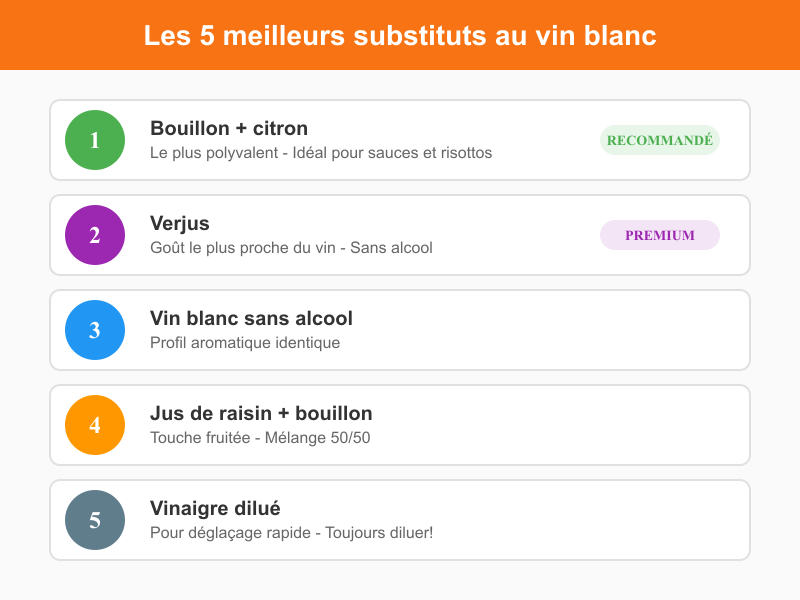
| Substitute | Best for | Ratio | Flavor |
|---|---|---|---|
| Broth + lemon | Sauces, risottos, poultry | 1:1 + 1 tsp lemon/250ml | Neutral, fresh |
| Verjus | Fish, delicate sauces | 1:1 | Wine-like |
| Non-alcoholic white wine | All recipes | 1:1 | Identical |
| Grape juice + broth | Fruity dishes | 50/50 | Fruity, mild |
| Diluted vinegar | Quick deglazing | 1 tbsp/250ml broth | Acidic, clean |
1. Broth + acidity (most versatile)
This is the most dependable option for sauces, sautéed dishes, poultry, fish, and risotto. Replace wine 1:1 with stock (chicken, vegetable, fish), then add a small amount of acid.
Easy ratio: for every 1 cup (250 ml) of stock, start with 1 teaspoon of lemon juice or a mild vinegar, taste, and adjust.
Good acids: lemon juice, verjus, a mild vinegar, or even a tiny splash of pickle brine if it matches the flavor profile.
💡 Tip: Always start with a small dose of acid. This works especially well in creamy sauces, where acidity prevents a flat, heavy finish.
2. Verjus (closest wine-like flavor, no alcohol)
Verjus (pressed unripe grape juice) offers gentle acidity and grape aromatics that mimic wine more naturally than most options. It's excellent in seafood, poultry, pan sauces, and risotto, and it's great for deglazing.
3. Non-alcoholic white wine
If you want the closest match to wine aroma, non-alcoholic white wine is a practical substitute. Note that some brands run sweeter, so you may want a slightly longer reduction.
4. White grape juice or apple juice + stock
For a subtle fruity roundness, mix 50% stock + 50% white grape or apple juice. If it tastes too sweet, add a small squeeze of lemon.
5. Vinegar (always diluted)
Pure vinegar can be harsh. Use it in small amounts and dilute it with stock or water. Example: 1 cup stock + 1 tablespoon mild vinegar, then reduce. This is best when wine was used mostly for acidity and deglazing.
How to deglaze without wine
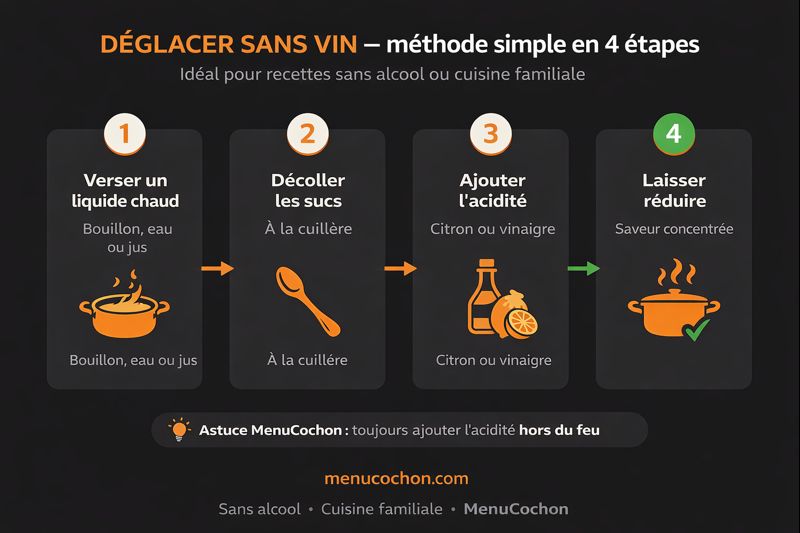
Deglazing doesn't require wine. The core technique is heat + liquid + a touch of acidity.
- Add warm stock to the hot pan
- Scrape the bottom with a spatula to lift the fond
- Add lemon/verjus/mild vinegar once the browned bits release
- Reduce to concentrate flavor
You'll get a pan sauce that tastes clean and well-balanced—without alcohol.
What about red wine?
When a recipe calls for red wine, you're usually aiming for deeper fruit notes and more intensity. Two reliable approaches:
- Stock + red juice (red grape, cranberry, pomegranate): great for stews, braises, and brown sauces.
- Stock + red wine vinegar (highly diluted): best when the red wine was used mainly to balance and deglaze.
Vinegar substitution chart
Replacing vinegar is different from replacing wine: vinegar is already strongly acidic, so you're mostly matching sweetness and aroma.
| Original vinegar | Possible substitutes | Notes |
|---|---|---|
| White wine vinegar | Rice vinegar, cider vinegar, lemon | Rice is milder, cider is fruitier |
| Cider vinegar | White wine vinegar, rice vinegar | White wine is more neutral, rice is milder |
| Rice vinegar | Diluted white wine vinegar, diluted cider | Reduce amount and taste |
| Red wine vinegar | Neutral vinegar + sugar, balsamic | Balsamic is sweeter |
| Balsamic vinegar | Red wine vinegar + honey | Or reduce a mild vinegar |
A note on "cooking wine"
Cooking wine is often salty and lower quality. In most cases, you'll get a better result by using stock + gentle acidity (or verjus) so you can control salt and keep flavors cleaner.
Summary
Whether you're making risotto, a sauce for poultry, mussels, or a quick deglaze, the logic remains the same:
- Stock for volume
- Acidity (lemon, verjus, diluted vinegar) for balance
- Aromatics (onion, garlic, herbs, reduction) to rebuild complexity
With these substitutes, you can cook without wine while keeping your dishes flavorful and well-balanced!
Recommended Equipment

Instant Pot Duo 7-en-1 Autocuiseur
View on Amazon
Victorinox Couteau de Chef 8 pouces
View on Amazon
Lodge Poêle en Fonte 10.25 pouces
View on AmazonAs an Amazon Associate, we earn from qualifying purchases.